Reading Blog #2
I found the New Yorker article on John Cage to be quite interesting. I played quite a lot of music growing up and was taught in a traditional way of how to play the piano, and drums, which was nothing like John Cage's experimental compositions. While I agree with much of what was stated in the article, including the idea of John Cage's "4:33" being a frame for the sounds of the audience, from what I've heard I consider John Cage to be an artist more than a musician.
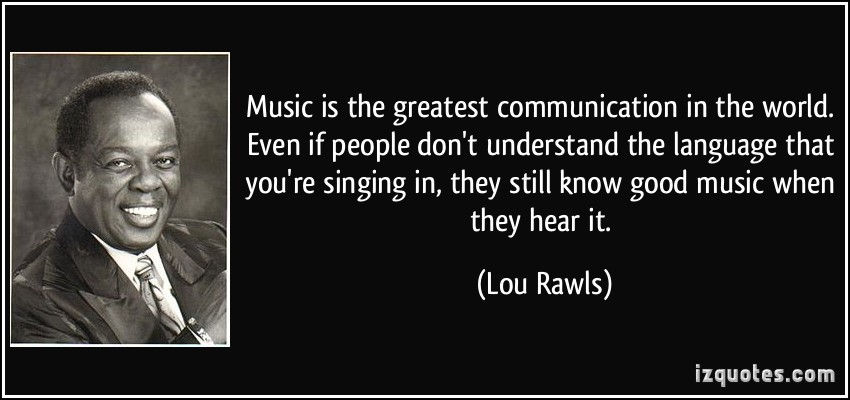
I see music as a language, as it can be played anywhere in the world to evoke a certain feeling of happiness or joy that is almost unexplainable. Trained musicians from different sides of the globe can communicate through music even if they don't speak the same language. Like it or not there are also rules within music that allow it to have many qualities, some of which I just described, that make it a language. If you were to strip these rules away or not follow them, the communication would be lost in the same way if you were to speak gibberish to an English speaking person, they wouldn't be able to understand or communicate back to you. It's also worth noting that there can be radical change within music, and has been, without breaking out of these rules that allow for music to be most effective at communicating a powerful feeling or message to the audience.
Comparing Cage to other artist's such as Marcel Duchamp however, I see much more overlap. While Cage's compositions are not pleasing to the ears, they challenge a preconceived notion of what music is. I think that Cage's work is interesting because it has us talking about what music even is in the first place, and blurs the lines between abstract art and music.
I'm excited to undertake this assignment and experiment with something new that I haven't done before. I want to be true to what I think of a John Cage composition and create a soundscape with random sounds that will disorientate the listener. Instead of trying to put different sounds in sequence with one another, I think it will be interesting to but opposing sounds, say the purring of a cat and construction noise, next to and over one another.


Comments